
The Pickleball Boom in York Region — And the Shakeout That’s Coming
Pickleball in York Region didn’t start with multi-court facilities—it started in gyms, driven by early adopters and community builders. As private clubs expand across Vaughan and beyond, a new phase is emerging. With municipalities like Newmarket stepping up with large-scale indoor courts, the future of pickleball will be shaped not just by access—but by affordability, programming, and community.
Mike Bowcott Pickleball Partners
3/25/20265 min read
Pickleball in York Region didn’t start with facilities.
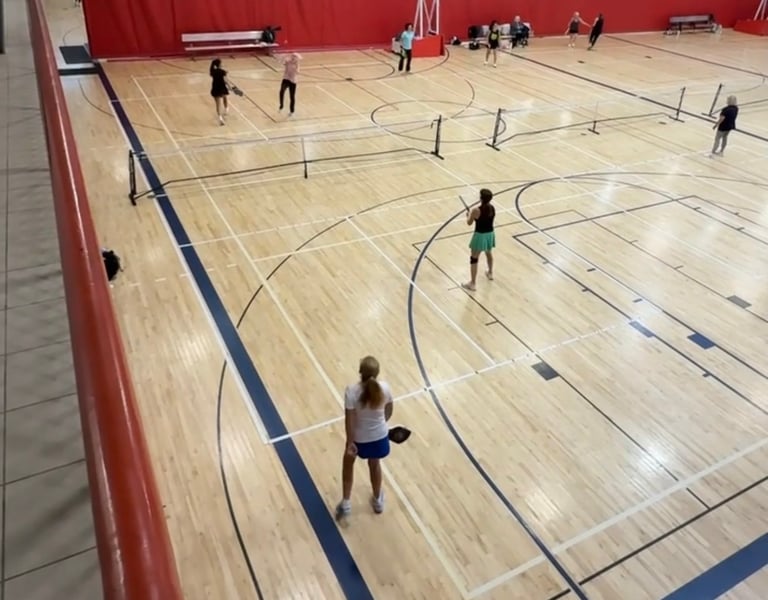
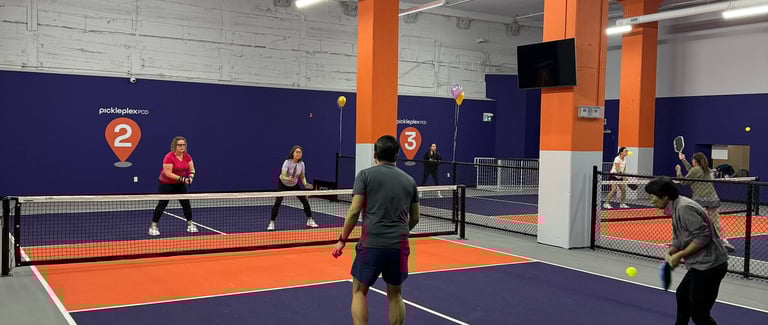
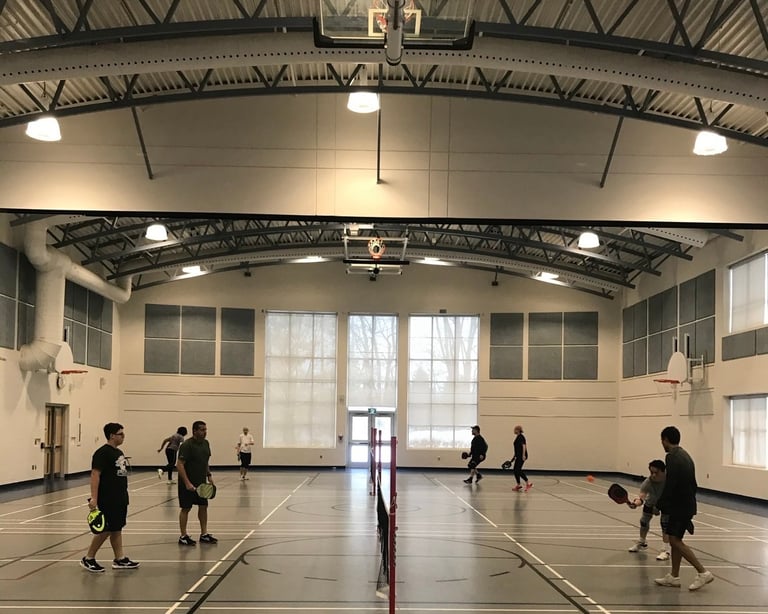
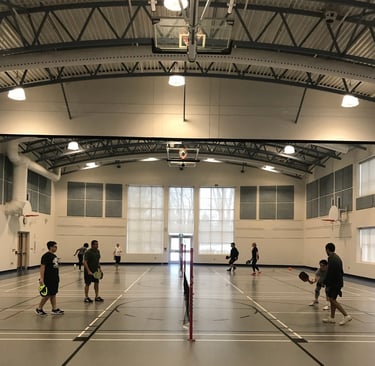
It started in gyms, community centres, and shared spaces—with a small group of early adopters who saw something in the game before most people had even heard of it.
They lined courts with tape.
They shared time with other sports.
And through simple organization and word-of-mouth, they built something that would eventually grow far beyond those early spaces.
Richmond Hill: Building a Community Before Infrastructure
Long before dedicated courts existed, the growth of pickleball in Richmond Hill—and across York Region—was driven by people, not infrastructure.
In 2021, with no dedicated courts available, efforts were made to unlock access wherever possible. Two unused tennis courts in Richmond Hill were lined for pickleball, and through outreach and word-of-mouth, interest quickly grew.
From July to September of that first summer, over 150 new players were introduced to the game.
The following year, that number grew to more than 750.
This growth didn’t happen because of facilities—it happened because of programming, organization, and a commitment to making the game accessible and welcoming.
By 2022, the demand had become impossible to ignore. Richmond Hill Council approved 16 dedicated courts at David Dunlap Observatory Park—a clear signal that the community had reached critical mass.
But momentum stalled.
Following a change in council later that year, progress was halted and pickleball planning was deferred until at least Spring 2025—just one year before the next municipal election.
In the meantime, the community has continued to grow dramatically.
Today, the Richmond Hill pickleball network exceeds 3,000 players—without a single dedicated indoor facility, and with no clear timeline for meaningful infrastructure until potentially the end of the decade.
The Rise of Private Facilities
As demand grew, private operators stepped in.
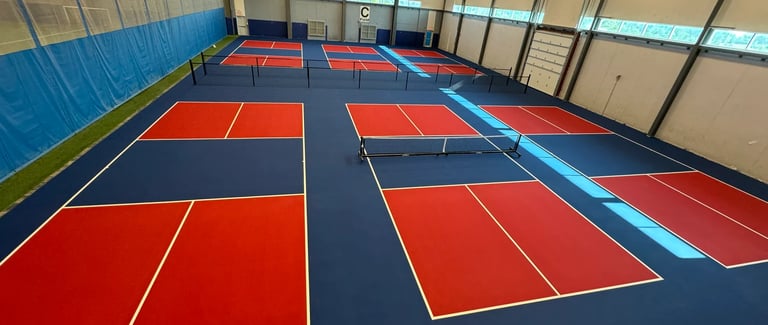
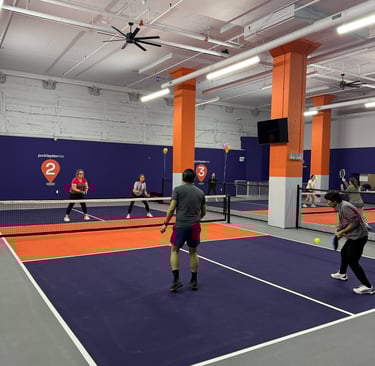
HiSports opened 11 dedicated indoor courts in March 2025, while the Pickleplex model expanded rapidly, attracting entrepreneurs eager to enter the fastest-growing sport in North America. U.S.-based operator Picklr is now entering the Canadian market, beginning in Mississauga.
Across Vaughan and Newmarket, we are seeing continued growth, including:
Vaughan Pickleball (formerly HiSports)
Pickleplex (multiple locations)
Grandview
The Backyard (a proposed 20-court facility opening Summer 2026)
These facilities filled a critical gap. They provided reliable indoor access, improved playing conditions, and consistency—something that had been missing during the early growth phase. For many players who entered the game through community-based programs, these facilities became the natural next step.
The Reality: Private Isn’t for Everyone
There is an important reality that cannot be ignored. Not everyone can afford the private model. Between memberships, court fees, and program costs, the total expense can be a barrier—especially for new players, casual participants, and families.
Pickleball’s growth has always been rooted in accessibility. As the sport continues to expand, maintaining that accessibility will be critical.
The Next Wave: Municipalities Will Have to Step In
The next phase of pickleball growth is already underway—and it is coming from municipalities. We are seeing this clearly in Newmarket.
With plans for a 20-court indoor bubbled facility, Newmarket is positioning itself as a leader in pickleball infrastructure in York Region. Rather than starting from scratch, they have built on proven concepts—including what had already been approved in Richmond Hill—and improved upon them.
Municipalities bring something fundamentally different:
Lower-cost access
Scalable infrastructure
Community-focused recreation models
If Newmarket gets the programming right, it will be very difficult for private facilities in that market to compete directly.
A Growing Divide
We are now seeing two parallel systems emerge.
Private Facilities:
Fast to market
Premium experience
Higher cost
Municipal Facilities:
Slower to develop
Focused on accessibility
Built for scale
Both are important. But they are not equal in how they shape long-term participation.
Richmond Hill: A Community Ahead of Its Infrastructure
Richmond Hill stands out in this conversation. It has one of the largest and most active pickleball communities in Ontario—built through years of grassroots effort and organized programming. And yet, progress on dedicated indoor and outdoor infrastructure has been slow.
The demand is already there.
The community is already built.
What’s missing is alignment at the municipal level to support it.
More Competition Coming
The entry of operators like Picklr and The Backyard adds another layer to the market.
The Backyard’s proposed location near Steeles & Dufferin introduces additional competition, though accessibility challenges may limit its reach. Based on its membership-driven model, it will likely serve a specific segment of players.
At least initially, it may not significantly disrupt established operators like Vaughan Pickleball or Pickleplex, which already benefit from:
Established communities
Proven systems
Strong player retention
Like all facilities, long-term success will depend on more than just the number of courts.
What Actually Sustains the Game
We are now entering a more mature phase of pickleball. The key question is no longer: “Where can people play?”
It is: “Where do people want to play—and stay?”
Because:
Courts create access
Systems create retention
As more facilities come online, the challenge is no longer simply attracting players—it is:
Retaining them
Organizing them
Creating meaningful playing experiences
The operators who understand community dynamics, player pathways, and programming that fits real lives will be the ones that succeed.
What Comes Next
The current boom is real—and it is exciting.
Private facilities are expanding.
Participation continues to grow.
But the next wave is already forming:
Municipal expansion
Increased access
Greater competition
And with it comes something even bigger—a new generation of players who have not yet fully entered the game. So far, much of the growth has been driven by early adopters—many of them over 50—who found the sport early and worked within limited access. But the next wave will look very different.
It includes:
Younger players
Families
Kids and teens
Many of them have been shut out—not due to lack of interest, but due to lack of access.
Courts are full.
Programs are limited.
And private facilities are not always affordable.
The social and mental benefits of pickleball—connection, physical activity, and overall well-being—are already well understood by those who play. But we are only scratching the surface.
Once municipalities begin to respond at scale—building courts, creating access, and listening to their communities—we will see a second wave of growth that is even larger than the first.
It will be:
Younger
More diverse
More family-oriented
Final Thought
Pickleball in York Region did not start with buildings. It started with people—early adopters in gyms, volunteers creating opportunities, and community builders bringing players together. That foundation is what made today’s boom possible.
The first phase built the community.
The second phase built the facilities.
The next phase will determine which models are sustainable.
Because in the end:
Courts bring people in.
Community is what keeps them there.
Pickleball Partners was never focused on owning facilities—we focused on growing the game.
On bringing players in.
Connecting them.
Giving them a reason to play.
And now, as the landscape evolves, the opportunity is even bigger.
The next phase is not about where people play.
It is about how they connect and play.
Bringing players and clubs together.
Creating flexibility in when and who they play with.
Building a system that keeps people in the game for the long haul—supporting their health, preventing injuries, and helping them play well into their 70s and 80s.
That is where this is all heading.